We may never touch queerness, but we can feel it as the warm illumination of a horizon imbued with potentiality. We have never been queer, yet queerness exists for us as an ideality that can be distilled from the past and used to imagine a future.
José Esteban Muñoz, cruising utopia
time in queer narratives cannot move forward. it coils, it spirals, it haunts. the future echoes the past; the past troubles the present; the present shapes what is yet to come. the refusal of “the linearity of straight time” is, according to josé esteban Muñoz, “a path and a movement to a greater openness to the world” (chapter I) which can only be reached by abandoning traditional and outdated structures.
this temporal disconnection is the subject of stephen daldry’s the hours (2002), in which the narrative haunts itself across three timelines: virginia woolf’s roaring twenties, rife with depression, crises, and creative efforts; laura brown’s post-war struggle with a stifling american dream; and clarissa vaughan’s contemporary troubles, hiding her lack of identity behind a caring façade. these women are not merely parallel: they echo and mirror each other.
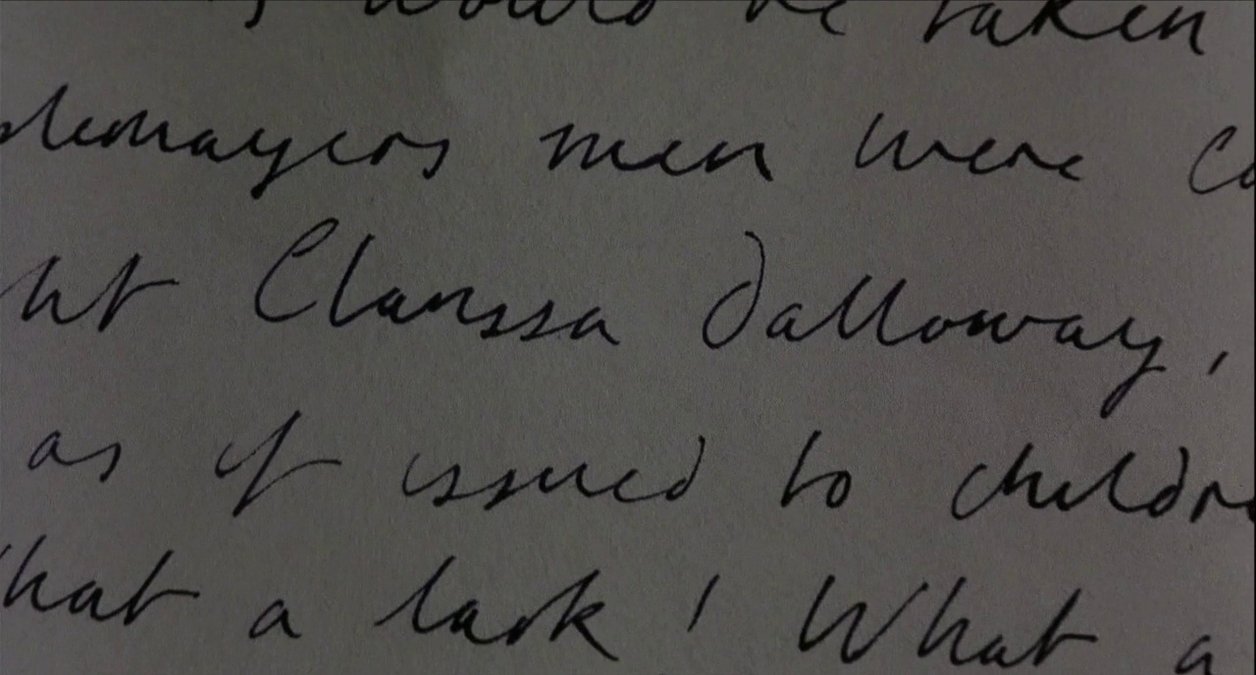
chronological order is defeated in true modernist fashion: a fragmented narrative structure, identities that fray and melt into one another, and recurring motifs. the hours could be easily misinterpreted as being “in love with female victimization” (schnickel), but upon a more careful reading, it clearly presents itself as an attempt to reconcile the haunting as well as the promising nature of this queer temporality. it is not a film about suicide, nor is it a tear-jerking portrayal of three hapless women, rather it is an interrogation of agency and temporality. the female characters are involved in a complex and continuous negotiation with and against time: their melancholia does not represent passivity, their struggles with suicide represent their repossession of life.
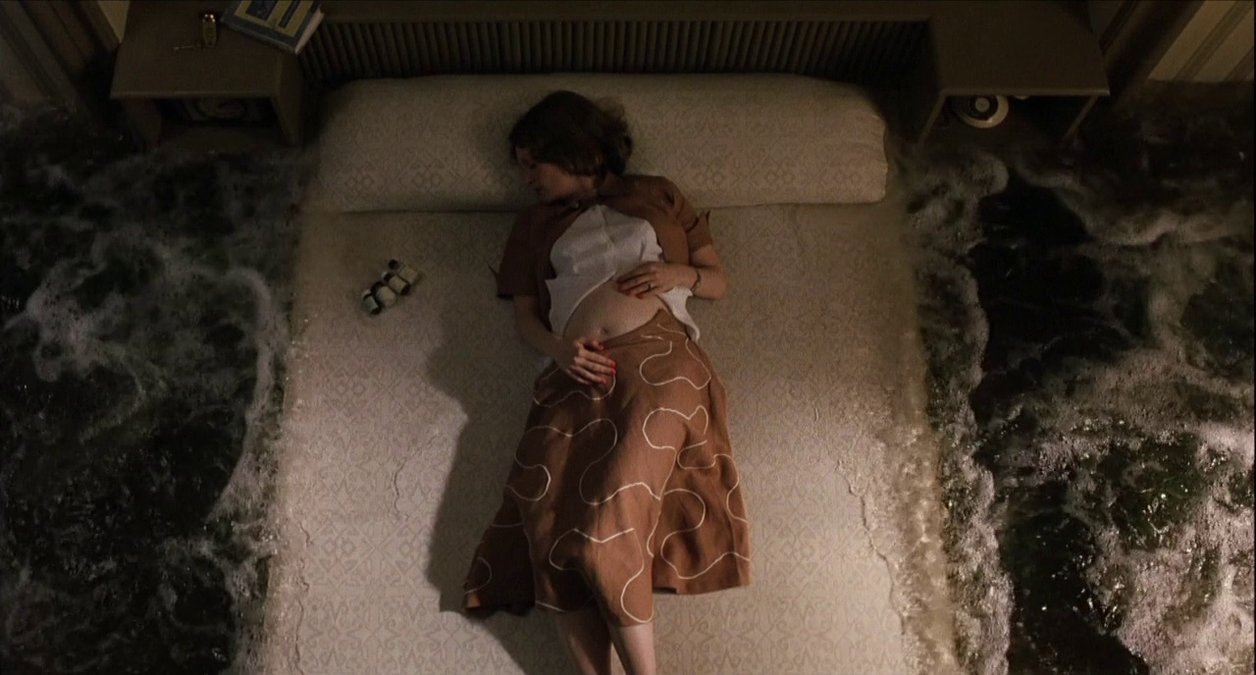
reading the hours through a posthumanist lens reveals that identity and time refuse linear trajectories, and instead exists as a complex and boundless network: the characters’ queerness evades the socially enforced milestones of life, which are shown as oppressive, suffocating. marriage traps virginia in a controlled environment; reproduction stifles laura’s personhood; the possibility of old age is stripped from richard; his death makes clarissa into an unwilling witness.
the disruption that they bring to societal expectations parallels that which they bring to the traditional time continuum: linked by mrs dalloway, the characters are made to relive its events—or, perhaps, the novel is written to reflect their lives—in a series of recurring motifs of flowers in vases, running water, parties and social events to organise. this leaves the audience struggling to ascertain exactly who mirrors whom, as all semblances of traditional structured timelines fracture irreparably.
similarly, their queerness shapes the way in which they live time:
- laura shares a passionate kiss with her neighbour, the first instance of her following her own desires. her lesbian experience fundamentally shocks her present, and brings her to “choose life” by abandoning her heteronormative life, embracing the future.
- Virginia’s own bisexuality is an integral part of that which sets her aside from the traditional understanding of what a woman should be: she is excluded from that present by refusing the heritage of a victorian past.
- clarissa is in a long-term relationship with another woman, sally, while simultaneously being committed and affectionate towards richard: she does not only muddle the lines of heteronormative life, but also refuses the strict binarism of queerness. she hides in the parts of her present that she can control, while avoiding the future and its uncertainties as well as the past with all its regrets.
in richard’s character we may also read an echo of woolf’s septimus warren smith: both are forced to exist in two timelines—that of a war, in smith’s case, and of illness in richard’s—which muddle their understanding of what is truly happening before them. richard laments hearing voices, smith fights against his battle shock: both experience two moments at once.
richard’s ongoing struggle with his advanced AIDS causes him to lose lucidity: “i seem to have fallen out of time,” he tells clarissa, dejected by his existence in a state of limbo, neither alive in the present, nor dead and thus belonging to the past. the only solution to escape this void is to follow in septimus’ steps and reassert his personal and temporal agency. similarly, virginia’s own attempt derives from a need to own her own fate, rather than leaving it in the hands of doctors and husbands and men.
in the end, they must escape. virginia drowns herself—a scene which frames the entire film, being the opening and closing shot—while both mrs dalloway‘s septimus and the hours‘ richard throw themselves out of a window.
posthumanism is fluid. it does not allow for stagnation, but finds strength in constant change and movement. it allows us to view time not as a calm stream, flowing towards a set destination, but as a powerful whirlpool, a riptide that follows no path. like queerness, it resists fixated states of being. queer time is non-teleological, it expands and retracts with no clear direction or goal, it does not disappear, does not leave the places that it called its own, does not allow itself to be in the past, but rather it manifests itself continuously, shifting and changing but always present.
sources:
Daldry, Stephen. The Hours. Paramount Pictures, 2002.
frameset. the hours. https://frameset.app/stills/director/stephen-daldry/the-hours
Movieclips. “The Hours (10/11) Movie CLIP – You Have to Let Me Go (2002) HD.” YouTube, 2 Oct. 2011, www.youtube.com/watch?v=vWZapP8b11s.
Muñoz, José Esteban, et al. Cruising Utopia: The Then and There of Queer Futurity. 10th Anniversary edition, New York University Press, 2019.
SCHICKEL, RICHARD. “Holiday Movie Preview: The Hours”. Time. December 23, 2002. https://web.archive.org/web/20101022090123/http://www.time.com/time/magazine/article/0,9171,1003931,00.html.

Leave a Reply