“There is no prize to perfection. Only an end to pursuit.”
viktor, arcane (2024)
Contemporary science fiction often deals with transhumanist narratives—regardless of whether or not it is a conscious decision to lean into them. How could it not, when images of cyborgs and futuristic ecumenopoleis are so intrinsic to our collective idea of what science fiction is? Transhumanism, to give a large concept a small definition, is a:
philosophical and scientific movement that advocates the use of current and emerging technologies—such as genetic engineering, cryonics, artificial intelligence (AI), and nanotechnology—to augment human capabilities and improve the human condition.
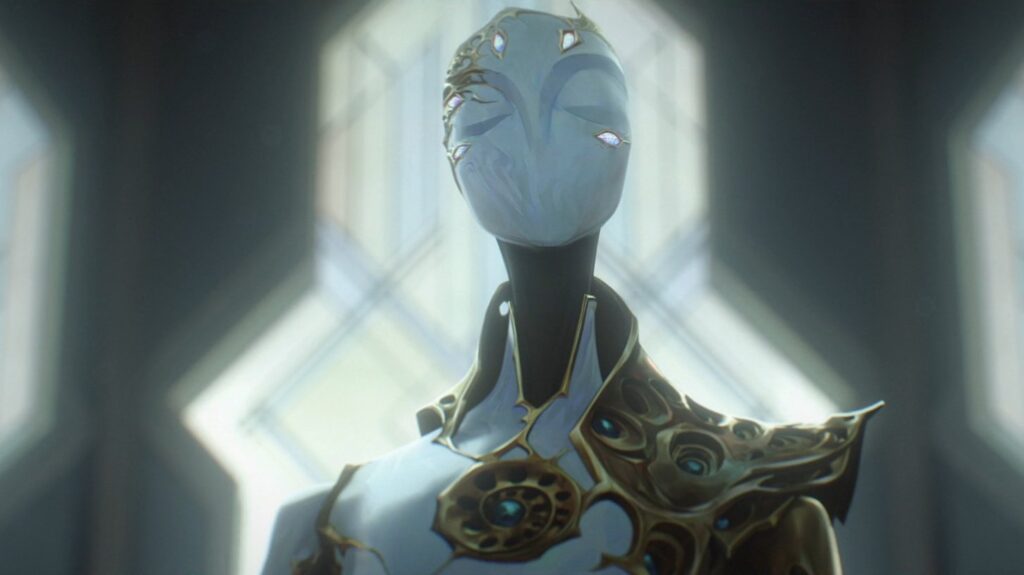
While it is clear that the concept in itself can lead to interesting debates on the nature of humanity—which is more the scope of posthumanism, if we want to be entirely honest—it has been from its conception deeply entwined with a world of eugenics, racial supremacy, and ableism. The idea of transcending human limits is a double-edged sword, symbolising both a hope for betterment—often intended in a moral sense as the abandonment of hatred, shame, violence—while at the same time perpetuating a depiction of bodily differences or, more generally, disabilities, as something that needs to be corrected, erased, and overcome.
in fortiche animated series arcane, this struggle between transcension and erasure is perfectly encapsulated in the character of viktor, a zaunite scientist whose arc in both seasons of the show revolves around his relationship with science, progress, and his own disabilities. born in the forcibly empoverished undercity and affected from birth by the toxic fumes and poor living conditions, Viktor grows up with several life-threatening chronic conditions and an increasingly problematic limp, which ultimately alienate him from his fellow zaunites. at the same time, he is a brilliant innovator and scientist who leads the invention and study of the hextech, the in-universe technology that fuses science and magic together, alongside his partner, jayce talis.
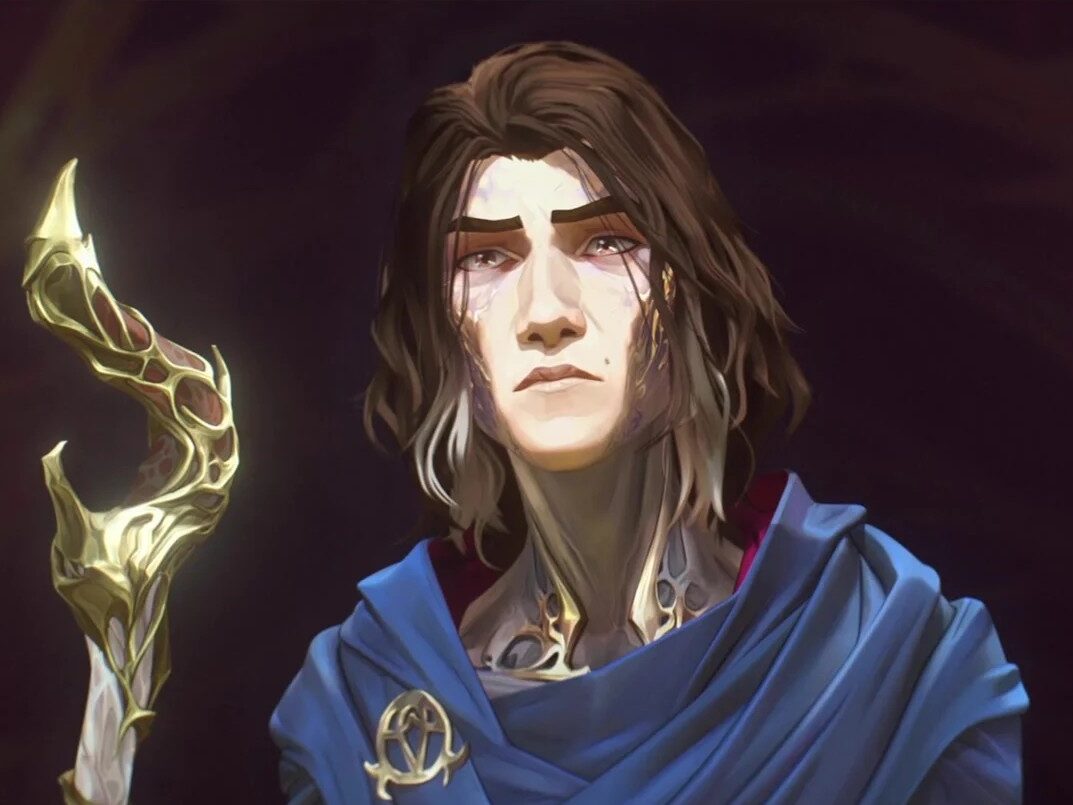
deeply scarred by his life in the undercity, and the terrible living conditions of the people who cannot afford to leave it, viktor’s initial drive is the betterment of life in his hometown, as he hopes to use the newfound technology to cleanse the air, aid the workers in the mines, and essentially bridge the gap between zaun and the ever evolving piltover. his pursuit of progress betrays his wish to reclaim agency in a world that considers him as “lesser”, both due to his disability and his origins as a zaunite. his desire to “fix” himself is born out of necessity—as he has never known care and stability in his childhood—as well as external influence.
as his illness worsens and his death grows nearer, both viktor and jayce grow increasingly obsessed with the idea of using the hexcore—an augmented version of their technology, powered by runes—in order to save his life. when this leads to the death of an assistant, viktor decides to cease their efforts, and seems to accept his own mortality.
his partner cannot do the same though: after a terrorist attack that kills viktor, jayce uses the still-unstable hexcore in order to heal him, and effectively brings him back to life. this is the beginning of the show’s second arc, in which viktor is initially in a chrysalis or cocoon, from which he emerges completely healed, all traces of illness and disability having disappeared. he begins once again to embrace his belief that his hextech can liberate the world from human limitations, following in the tracks of the sociocultural legacy of ableism in which he spent his entire life, seeing disability as a problem in need of fixing: this is worsened by viktor’s own internalised ableism, encouraged by the systemic pursuit of physical progress and perfection.
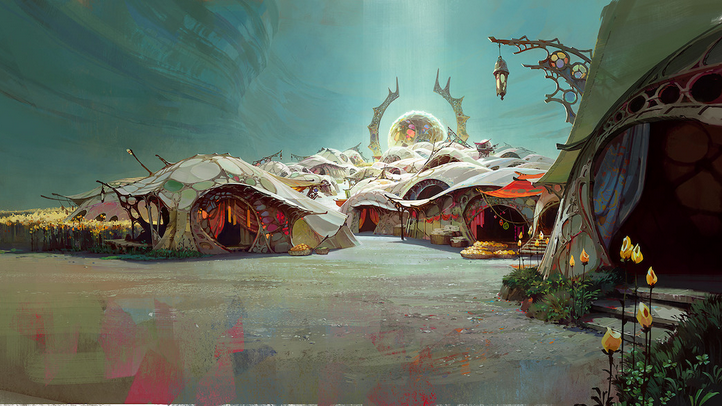
once he is free, he travels to the undercity once more, deep into the darkest, most hopeless parts of zaun: here, he begins to “heal” all those who come to him, restoring their bodies to perfect health and beauty, as well as reviving the earth itself by channelling the power of the hexcore. he creates an oasis, a perfect commune in which nothing and no one are anything short than flawless. he calls this his “glorious evolution”, meant to finally put an end to conflict, pain, and misery.
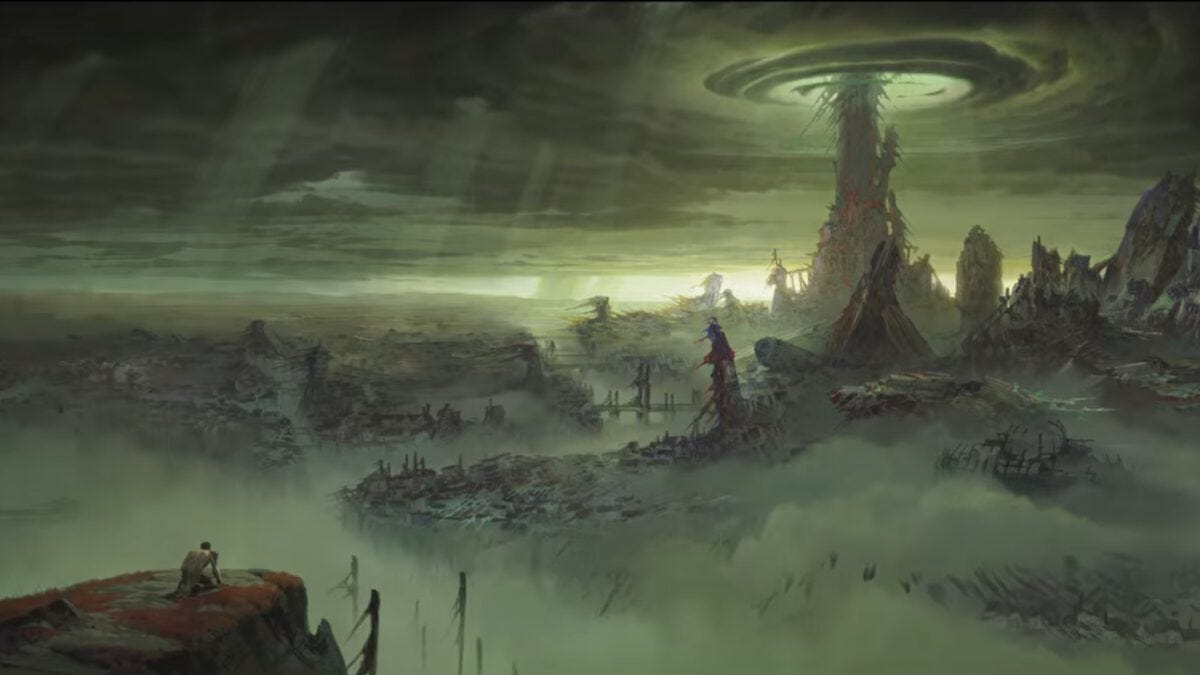
and yet, when we are confronted with a potential future in which this evolution has been allowed to take over, we are faced with a horrifying, barren wasteland, a cyborg graveyard, and a world devoid of life: the hexcore has consumed all that there ever was.
what i believe sets aside arcane from other media that also plays with the concepts of transhumanism, is its committal to refusing any sort of romanticisation of what is, fundamentally, eugenics. the show does not avoid naming the issue, nor does it attempt a “devil’s advocate” counter-argument. from the very first scene, we are made aware as an audience that there is something terribly uncanny about viktor’s appeareance and actions.
viktor’s arc is characterised by a deep, overarching empathy. he is a tragic character, and is allowed to have conflicted morals as a result of his traumatic experiences: he is never, though, excused or justified. this, i think, belies the depth and care that has been put into the writing of this show.
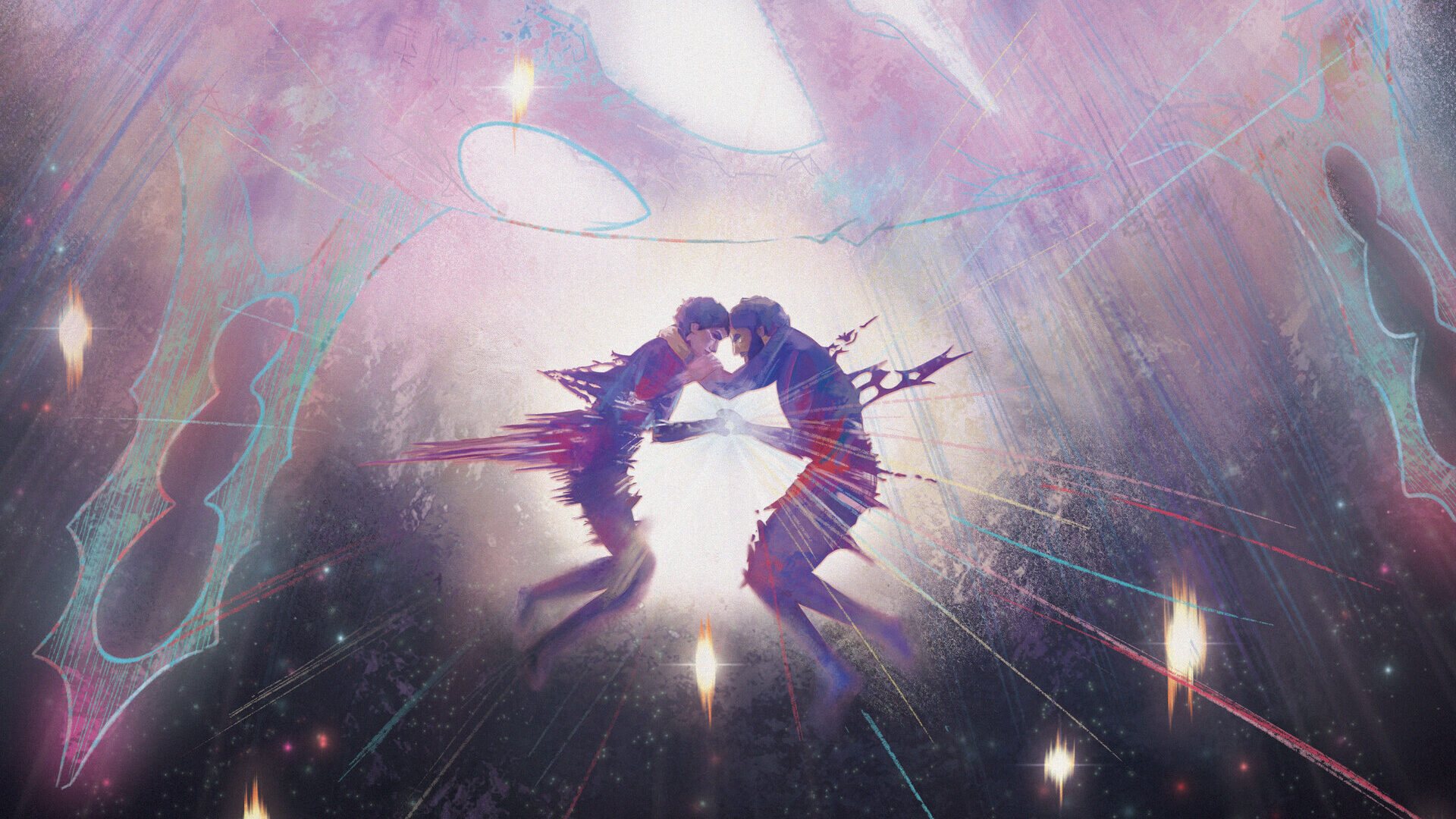
the most emotionally cathartic moment in the series is the very ending of viktor and jayce’s entwined fates: During their final confrontation, viktor is finally forced to admit to himself as much as his partner that at the heart of his drive for progress and perfection, of his quest to rid the world of what he perceived to be flaws, was a deep-set belief that no one could or would ever love him in his entirety, despite his disability. Instead of leaning into a pitiful, sentimental angle, the writers elevate this moment by having jayce confess what he always thought viktor knew: that he does not love him in spite of his disability, but also because of it.
This distinction is the key through which the entire story falls back into shape: “despite” implies an obstacle, while jayce’s all-encompassing love includes viktor’s disability as a fundamental part of him, a constitutive element of his strength, resilience, compassion, and drive. He does not frame his feelings as redemptive, they are reflective. His love mirrors back viktor to himself as whole, worthy, and entirely human.
sources:
cap-that. images from arcane season two, https://www.cap-that.com/arcane/?seasontwo.
fovus. “final”, artstation, https://www.artstation.com/artwork/bgrqqd.
Ostberg, René. “transhumanism”. Encyclopedia Britannica, 19 Mar. 2025, https://www.britannica.com/topic/transhumanism.
tudum. “viktor’s commune”. tudum gallery, https://www.netflix.com/tudum/galleries/arcane-season-2-making-of-viktors-commune?mediaIndex=0.
Leave a Reply