The gothic genre has been traditionally associated with a branch of nineteenth century literature renowned even at the time for its sensationalistic elements. Its backdrops are haunted mansions and dark, gloomy castles, imposing cliffs and moors covered in mist, dingy alleys and a world seemingly stuck in crepuscular light; its characters are vampires, scientific experiments grown sentient, monsters sewn together from pieces of our most hidden dreams.
We have never truly left the gothic behind.
Instead, it has changed and shifted with cultural currents, acclimatising to a rapidly expanding world: what I refer to as the digital gothic is merely the merged result of those blurred Victorian boundaries with the current technological advancement. The sinister mansion has turned into a sleek laboratory, the dark castle replaced by mind-bending skyscrapers. Apparitions are now digitally integrated, ghosts haunt our devices, and the line between monster and human has become indistinct. ideas that were once considered pure science fiction—artificial intelligence, eternal digital life—are now discussed in the present tense: we are in the era of the digital gothic.
digital haunting becomes a new persecution, and we are reminded all too often by commemorative pages on social media, “in memory of…” stamped all over the posts and ramblings that we subject our friends to, or by the presence on our phones of long-dead contacts, whose numbers may even have been reassigned long ago.
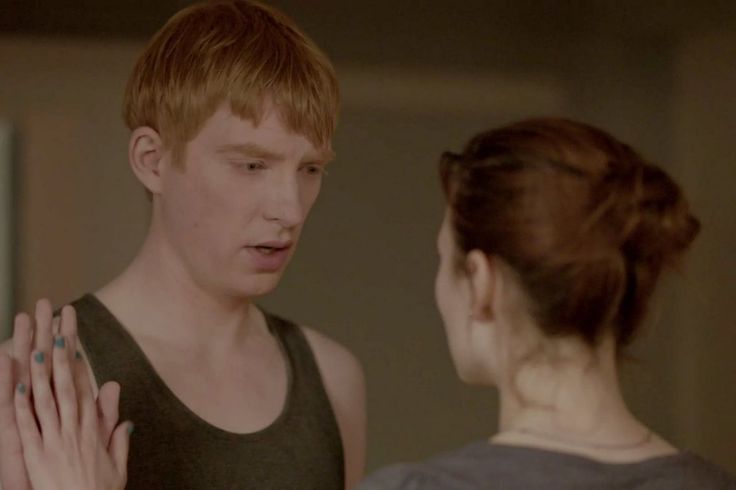
these two conundrums are at the heart of black mirror’s be right back, the opening episode of the show’s second season. following the sudden death of her partner ash, martha becomes her grief, rejecting all external attempts of connection. instead, she delves deeper and deeper into an artificial intelligence that emulates ash’s memories, his personality, his life. like a ghost, the ai chats with martha and keeps her company—keeps her encased in her mourning. their communication escalates from emails, to phone calls—since videos online allow the ai to replicate ash’s voice—until, consumed by the need to see him again, she subscribes to the service that will bring him back from the dead.
not unlike frankenstein’s creature, the undead ash is sewn back together from pieces of his own digital footprint, forever immortalised on the internet. his humour, his memories, his mannerisms—initially, he seems a miracle come (back) alive. yet, martha slowly grows to resent him: his lack of spontaneity, of agency, of emotional reaction all remind her that he is merely a pale imitation of a life lost. he is a dead yet prohibits mourning, a ghost of that won’t—or, indeed, can’t—remain in the past.
in the climatic scene of the episode, an infuriated martha drags ash over to the cliffs they often hiked when he was alive, and tells him to jump. ash, devoid of any true drive, goes to obey, only for martha to grow increasingly upset at the realisation that what she has been keeping in her house and heart is not her life partner. it is not even truly alive. it walks, talks, and laughs with her—but nothing about him is authentic.
the idea of the doppelgänger is hardly an innovative trope for the gothic genre, yet black mirror manages to turn it into a deep reflection on digital identity. martha’s grief and desire are reflected back at her whenever she looks at ash, but in a distorted and perverted way. ultimately, she is unable to be rid of him—the fear of a second death too great even for her disgust—but determines to keep him locked away in the attic, as far from her and her child as she can muster.
in true gothic fashion, we are not entirely sure at the end of the story whether we are content with his banishment, which may finally give martha room to grow past her loss, or upset at her behaviour, as for all that his flesh is synthetic and his memories dowloaded, ash truly did believe that he had been brought back for her.
the digital gothic, much like its original counterpart, poses more questions than it provides answers. it carries with it an obsession with death and with its defiance, while simultaneously cautioning against rebelling against it. for all the technological advancement, for all that we may grow older and healthier and more stubbornly resistant to our own transcience, it turns out that being mortal may just be what makes us all human after all.
sources:
brooker, charlie. “be right back.” black mirror, directed by owen harris, season 2, episode 1, channel 4, 2013.
Garland, Alex. Ex Machina. A24, 2014.
ghigo “Kid.” “Black Mirror (S02E01) Be Right Back (2013) Scene.” YouTube, 12 July 2019, https://youtu.be/AWf5Rd8x7Qc?.
the movie database. “black mirror, Season 2 episode 1.” Tmbd, https://www.themoviedb.org/tv/42009-black-mirror/season/2/episode/1.
Leave a Reply